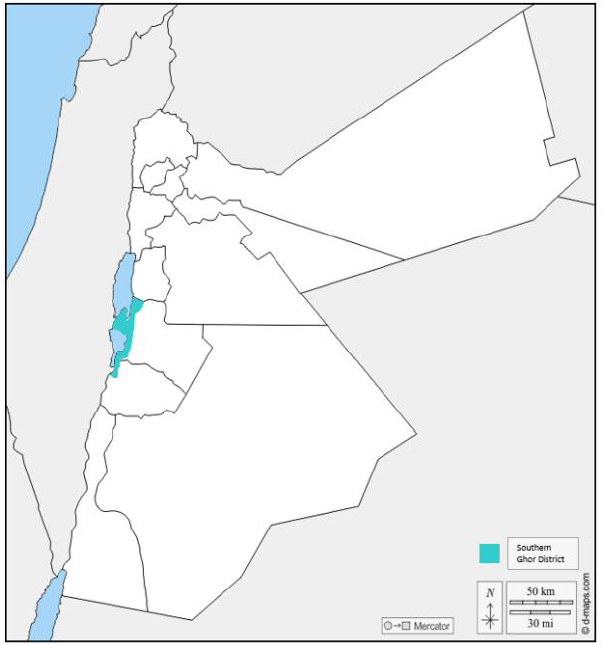
Southern Ghor district and Ghor Al Safi Sub-District
Southern Ghor District is a district located in the Jordan Valley southwestern part of Jordan, in the Karak Governorate. It covers an area of approximately 350 square kilometres and is home to a population of around 65,000 people. The Southern Ghor district is made up of 2 subdistricts: Ghor Al Safi and Ghor Al Mazara’a. According to the Department of Statistics, poverty rates in Southern Ghor, Ghor Al Safe, and Ghor Al Mazara’a are 45.4%, 61.9%, and 21.4% respectively.
63,550
District Population
45.5%
Poverty Rate
38,810
Sub-district Population
61.9%
Poverty Rate
Due to its year-round warm weather and fertile soil, the Southern Ghor district is an agricultural hub in Jordan and is often called the breadbasket of Jordan. In the Jordan Valley, there are about 33,370 agricultural worker, of which 8,217 are female workers. The vast majority of these workers are non-Jordanian and are constantly changing the location of their shelter depending on agricultural seasons.
The living conditions and Water, Sanitation, and Hygiene (WaSH) infrastructure situation for the population of the Southern Ghor district are very poor and considered marginalized. There, underserved communities lack the safe access and storage of water in the world’s second most water-scarce country; on average, people of the Southern Ghor District are provided with water one day per week, which they must safely store in tanks and barrels to last them for the next water supply provision. Moreover, the district of the Southern Ghor district is not connected to any type of sewerage, and communities rely on unsanitary excreta management; most prominently open cesspools and cesspits that overflow and cause diseases, seep into and contaminate groundwater, and threaten the stability of households.
WASH situation briefing
- On average, people of the Southern Ghor District are provided with water one day per week, which they must safely store in tanks and barrels to last them for the next water supply provision.
- The district of the Southern Ghor district is not connected to any type of sewerage, and communities rely on unsanitary excreta management; most prominently open cesspools and cesspits that overflow and cause diseases, seep into and contaminate groundwater, and threaten the stability of households.
- A baseline assessment was conducted through a door to door community survey.
Survey Highlights
- The average household size is 6, which is higher than the Jordanian average of 4.7
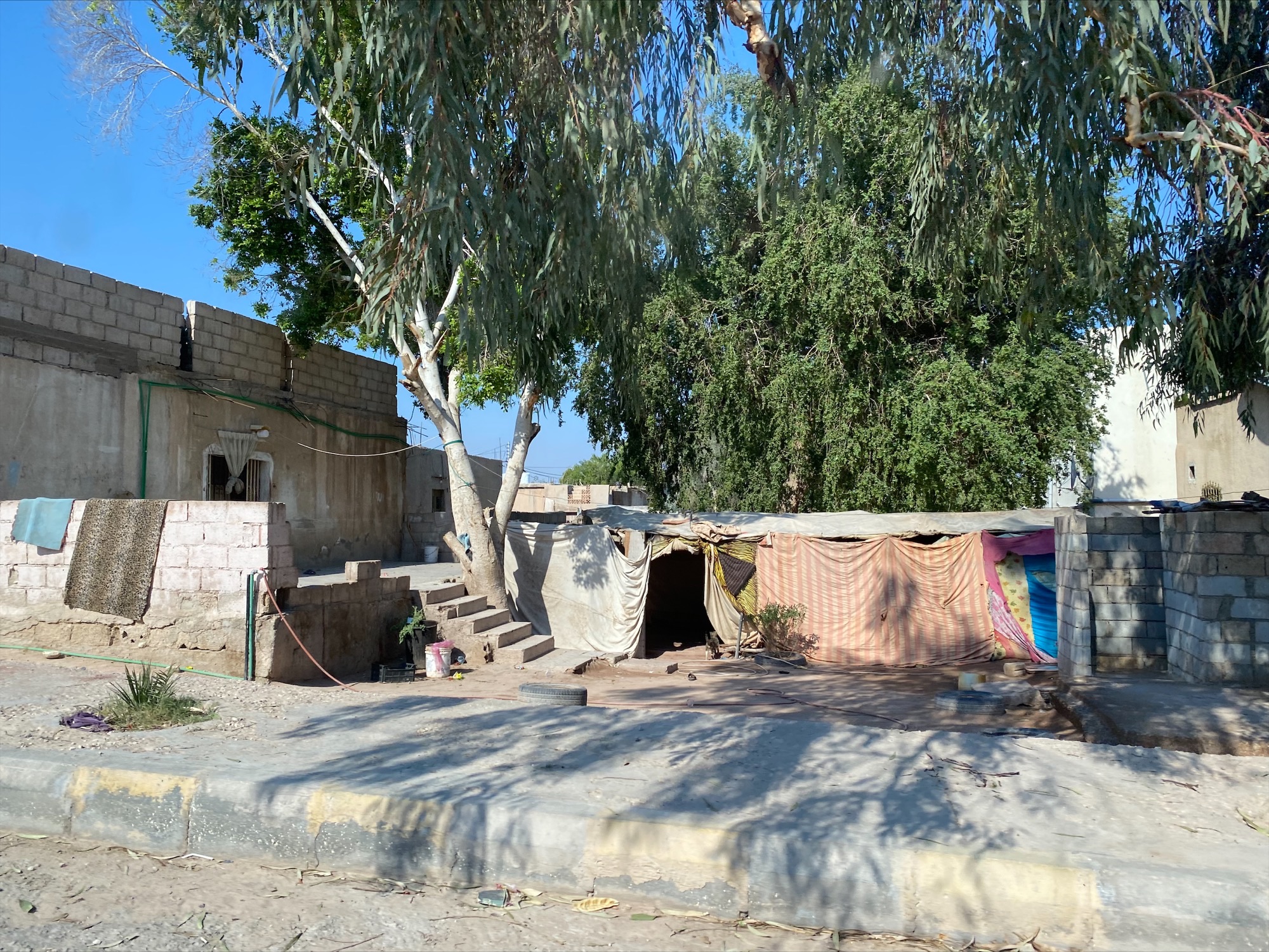
- 71.9% of respondents live in independent houses, 15.6% in tents, and 12.5% in apartment buildings.
- 15.3% of respondent households reported that they seasonally change their location of residence due to mainly two reasons: agricultural season and weather conditions.
- All households are not connected to a wastewater network, with 28.6% of households having a sealed concrete cesspit and 71.4% of household having an open cesspit.
Who are those poverty pockets groups?
Local Community of Southern Ghor District
Jordanian nationals that constitutes most of the inhabitants of the district. This community group lives in urbanized and semi urbanized clusters and are mainly an agricultural community.
Nomadic Bedouins
This community group lives in tents and usually change their place of residence seasonally due to weather and grazing conditions.
These groups are extremely vulnerable and still practice open defecation.
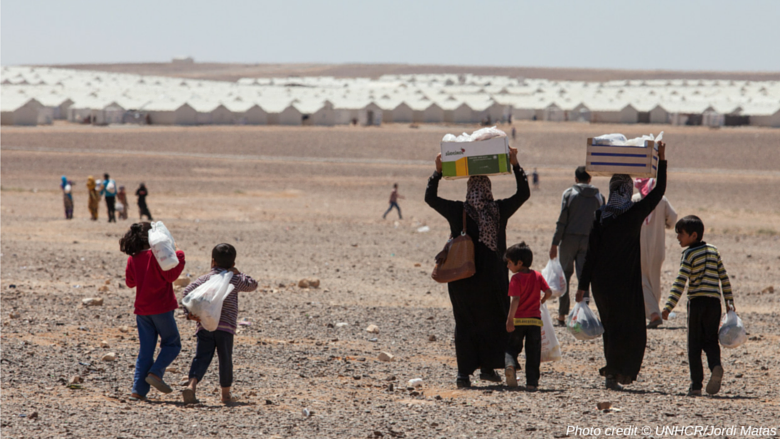
Non-Jordanian agricultural workers and Syrian refugees
Most of this community group are of Pakistani origin and are well established and integrated with the other community groups.
The majority of this community group take shelter and live in caravans and/or tents on the same farm fields premises. Some of them migrate seasonally due to changes in the seasons and agricultural sector demand.
Image source: WorldBank
 EST-S Project